
Holding tight on lake levels
As the Okanagan region heads into another year of drought, Penticton’s Dam Manager is already keeping the waterways on low outflow.
Shaun Reimer, section head for the public safety and protection section of the Ministry of Water, Land and Resource Stewardship, said they’re eight centimetres below their end-of-February target.
The seasonal targets, including the full pool, were developed years ago as part of a major Okanagan basin-wide consultative process.
“We still are concerned about how much water we’ll have and snow we’ll have to fill the lake because we’re 92 centimetres below the full pool target that we try to hit in June,” he said.
Keeping the lake at the target level is important to ensure adequate flows in the Okanagan River later in the year, both for fisheries and for irrigation.
In a fuller lake year, the level needs to be maintained in balance for people around the lake and for flood control.
The latest snow survey and water supply bulletin from the Ministry of Water, Land and Resource Stewardship stated that as of Feb. 1, the provincial snowpack is slightly below normal.
For B.C., the snowpack is averaging 96 per cent of normal, with the Okanagan sitting at 67 per cent of normal.
“We have very little low and mid-elevation snow as well. It’s a concern for the water supply,” Reimer said.
“Our strategy going forward, based on our conditions today, will be, we’re going to be trying to capture as much of that water in Okanagan Lake from the freshet as possible.”
Coming off three years of drought, the outflow from the lake has consistently remained low.
“We currently have just over five cubic meters per second going out of Okanagan Lake. And that’s pretty low. That’s getting down to the bare minimum,” Reimer said.
“The flip side of the fact that it’s been so warm is that any precipitation or melt that does happen goes into the lake, and that, combined with the fact that we’ve had such low outflows, has allowed us to keep the lake fairly flat for pretty much the winter.”
Areas in the province with below normal snowpack indicate the possibility of drought conditions, worsening in the spring and summer. However, there are still two to three months remaining for snow accumulation. Typically, two-thirds of the annual B.C. snowpack has accumulated by Feb 1.
As snowpack data is only one indicator of potential flooding or drought, a close eye will be kept on upcoming forecasts and weather events.
“I’m very hopeful that we’re going to get some significant precipitation,” Reimer said. “I can say I’m worried, but it’s early, and we’ve had many years where we were low at this point, and then we got precipitation, and it all worked out fine.”

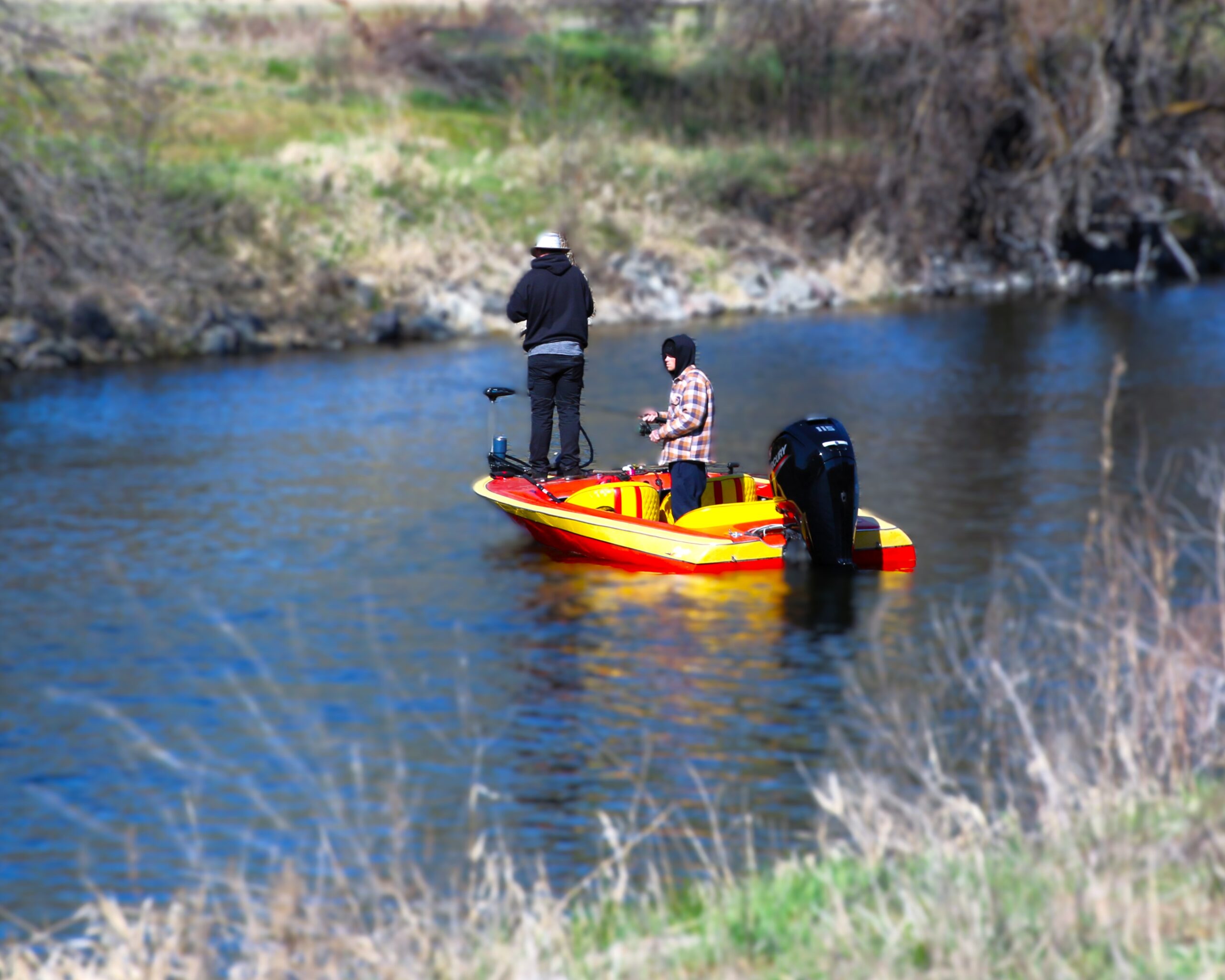
Early morning fishing on Okanagan River Channel above north end of Osoyoos Lake. Photo Credit: Neil Bousquet