

Watercraft: Clean, Drain & Dry
Boats and other watercraft are a frequent method of invasive aquatic species entering lakes and other waterways in B.C., including Osoyoos Lake. These species are not native to our area and they often "hitch a ride" on watercraft and accessories when being transported from one body of water to another; many creatures can survive outside the water on dry surfaces like a boat hull for weeks at a time if they are not carefully removed.
Species that threaten Osoyoos Lake include:
-
Non-native mussels and clams, especially zebra, quagga and golden mussels.
-
Aquatic weeds, such as Eurasian milfoil, blue-green algae and others.
-
Parasites, such as those that cause lethal whirling disease in fish.
These species can cause considerable environmental and economic harm once established, and they are often difficult if not impossible to eradicate once established in a body of water. Invasive species have devastated lakes and rivers around the world.
There's one vital step all watercraft owners must take to combat the threat of invasive aquatic species entering our lake: Clean, Drain and Dry your watercraft whenever you are moving it from one body of water to another. This applies to any kind of watercraft, including boats, kayaks, canoes, paddleboards, inflatable watercraft and others; these procedures also apply to any accessories that go in the water, such as boat trailers, waders, fishing gear and more.
CLEAN, DRAIN & DRY: HOW TO
The Invasive Species Council of B.C., in partnership with other organizations, operates the Clean Drain Dry program. This is its guidance for each step of the process:
-
Clean: While on dry land away from water, remove all mud, sand and plant materials from the boat and other equipment (e.g. boots, waders, fishing gear, etc.); use power washing if available. Pay attention to hidden, hard to reach areas, gaps, crevices, holes and other inconspicuous places. This card provides a helpful checklist of places to inspect on your boat.
-
Drain: Remove the water for any items that can hold water. Pull plugs, open drains, tip over portable items, or whatever else is needed to allow water to drain. This can include items like bilges, ballast, coolers, live wells, buckets and more.
-
Dry: Make sure all items are completely dried before launching into another body of water. Leave compartments open on boats and equipment until they fully dry out.
The Clean Drain Dry program has posted separate videos to demonstrate the process for boaters, anglers and paddlers.

IT'S THE LAW
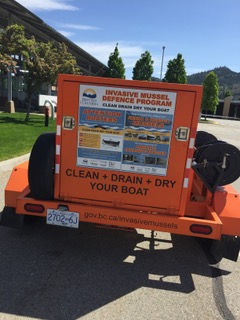
In 2015, B.C. launched the Invasive Mussel Defence Program to prevent the introduction of zebra, quagga and golden mussels into our waterways. This includes a watercraft inspection program between April and October with a series of inspection stations across the province, including one in Osoyoos. The B.C. Conservation Officer Service has a team of specialized inspectors checking and, if necessary, decontaminating watercraft.
It’s mandatory to stop at any open watercraft inspection station along your travel route when transporting a boat in B.C. Failure to stop at an open inspection station could result in a fine.
